
The Sixty-Minute Audit
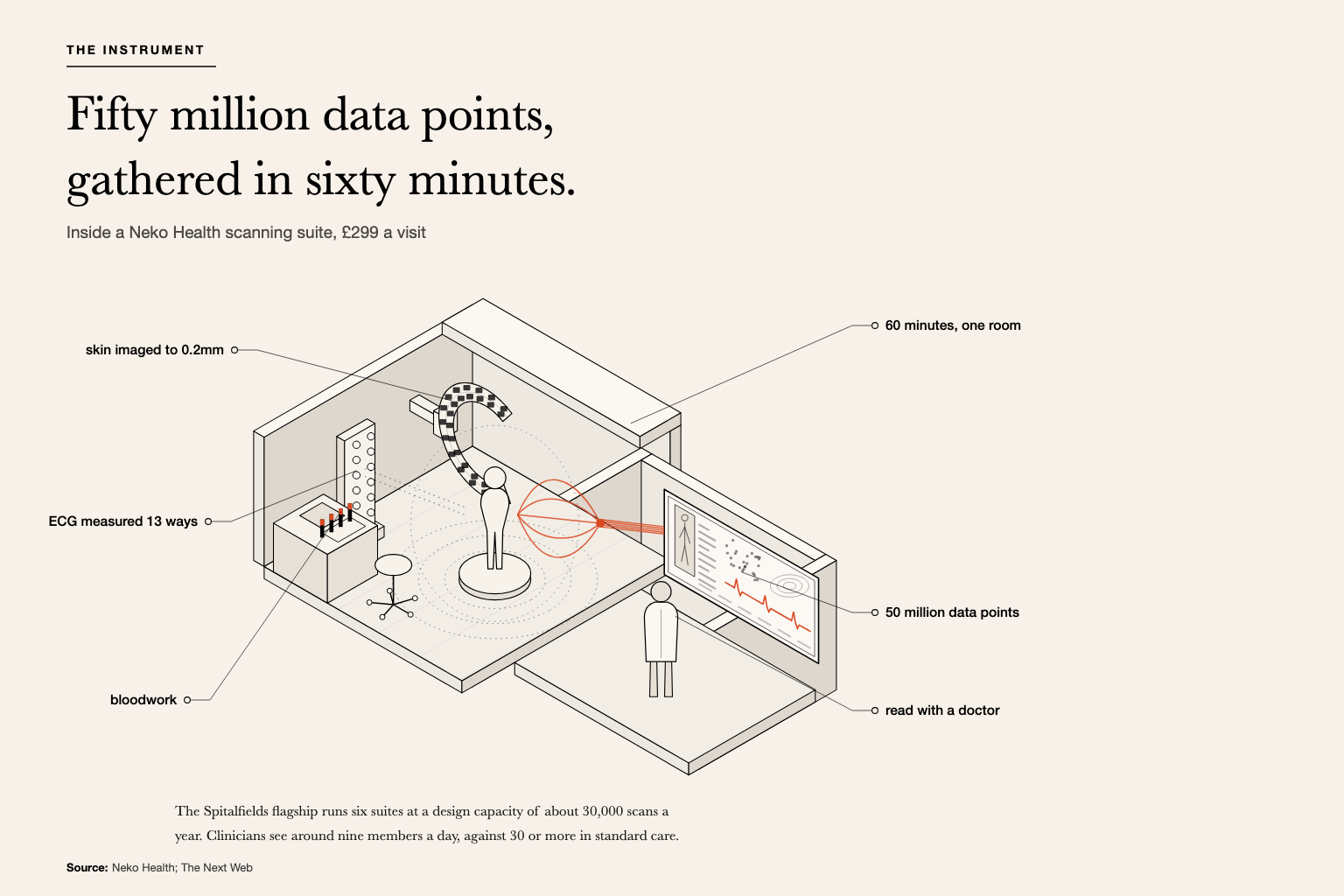
The clinic sits in a converted Victorian market hall in Spitalfields, east London, and it looks nothing like a doctor's office. The ceilings are high, the light is good, and the staff are dressed in a palette that suggests architecture rather than medicine. A member, which is what the company calls its patients, strips to their underwear and is guided through a sequence of proprietary machines. A nine-camera system photographs every centimeter of their skin, cataloguing moles down to 0.2 millimeters. Laser light passes through their tissues to map microvascular circulation. Electrodes measure the electrical activity of the heart thirteen different ways. Blood is drawn and sent by pneumatic tube to an in-house laboratory. Within sixty minutes, the member sits with a doctor to review a dashboard that has logged roughly fifty million data points from their body. The cost is £299. [1]
This is Neko Health, the Swedish preventive healthcare company co-founded in 2018 by Daniel Ek, who built Spotify, and Hjalmar Nilsonne, an engineer who trained at KTH Royal Institute of Technology in Stockholm. They launched publicly in February 2023 after four years of stealth development, describing their mission as doing for healthcare what Spotify did for music: making something previously available only to the very wealthy accessible to a much larger affluent market. [2] The ultra-rich had always been able to spend thousands of dollars on multi-day diagnostic protocols at private residential clinics. Neko's founding insight was that proprietary hardware, built from scratch rather than repurposed from hospital equipment, could compress a comparable clinical picture into one hour at a price that would feel, to its target customer, like an affordable luxury. [3]
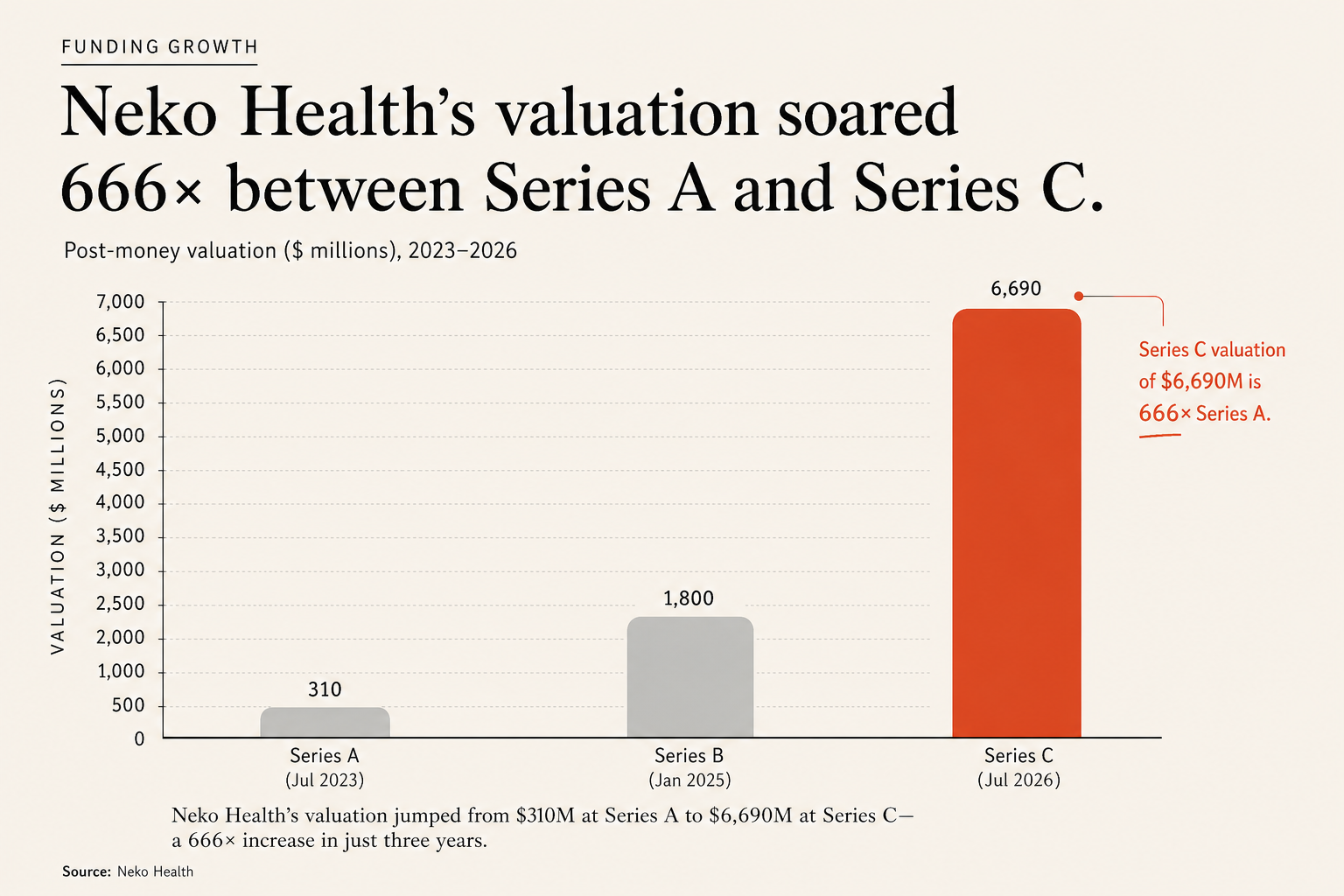
By January 2025, investors had concluded this was worth a post-money valuation of $1.8 billion, paying $260 million in a Series B led by Lightspeed Venture Partners. [4] At that point, the company was generating approximately $2.7 million in trailing twelve-month revenue, implying a valuation multiple of roughly 666 times revenue. [5] The number was not irrational on its own terms: it was an expression of investor conviction about the size of the market being built, not the business already built. By July 2026, after a further $700 million Series C co-led by Lightspeed and O.G. Venture Partners, the company's valuation had risen to approximately $7 billion, according to reporting by the Financial Times from unnamed sources, a figure Neko itself did not officially confirm. [6] [7] Among the individual investors in that round were Mark Zuckerberg, Tim Ferriss, Jimmy Iovine, Maria Sharapova, and Thierry Henry. [8] The company had by then completed over 100,000 scans, held a global waitlist of more than 350,000 people, and was preparing to open its first American clinic in New York. [9]
The Arithmetic of Escape
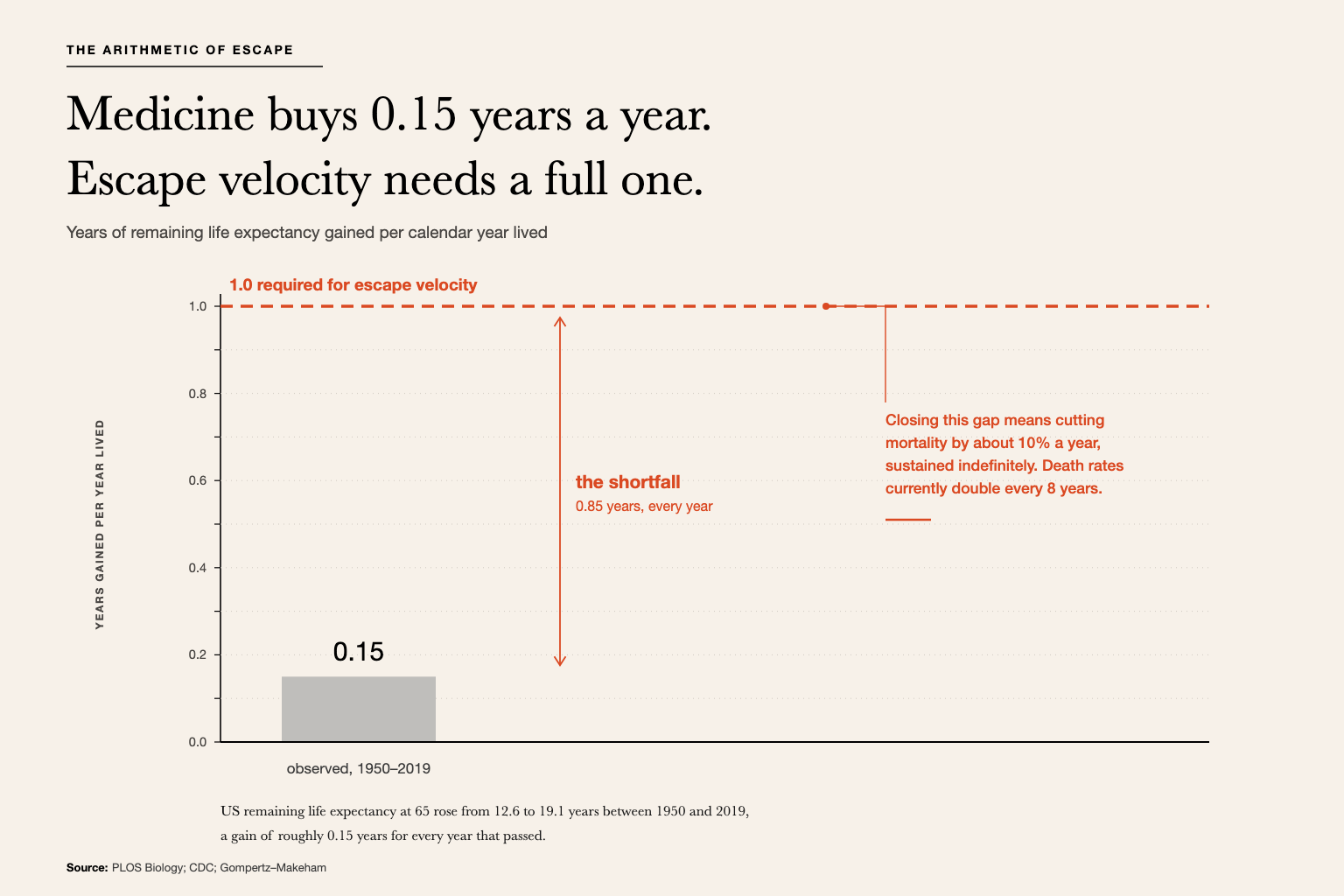
To understand what Neko Health is ultimately selling, it helps to understand a concept that began as an obscure piece of biogerontological speculation and has since become the unofficial ideology of an industry. Longevity escape velocity is the point at which medical progress adds more than one year to remaining life expectancy per calendar year elapsed. The logic is elegant in its simplicity. Aging advances at exactly one year per year. To escape it, therapeutic progress must outrun time itself. Once that threshold is crossed, each year of gained life expectancy gives the recipient more time to benefit from subsequent advances, which in turn extend life further, which in turn allows access to the next generation of treatments. The compounding runs indefinitely. Death, theoretically, recedes.
The term was formalized by Aubrey de Grey, a biogerontologist trained at Cambridge, in a paper published in PLOS Biology on June 15, 2004. [10] De Grey had been working with the related concept he called "actuarial escape velocity," and in the paper, framed as a book review of an economics volume on longevity, he argued that even modest initial success in life extension would buy enough time to develop more powerful subsequent therapies. "Even a 30% increase in healthy life span will give the first beneficiaries of rejuvenation therapies another 20 years," he wrote, "an eternity in science." [10] The TEDGlobal talk he gave in 2005 crystallized the implication in a single sentence: the first person to live to 1,000 years old is probably only about ten years younger than the first person to live to 150. [11]
The mathematics behind this requires precision. Under the Gompertz-Makeham model, which describes how human age-specific death rates increase exponentially with age, roughly doubling every eight years, achieving escape velocity requires sustained annual reductions in those death rates of approximately ten percent. [12] Current progress falls dramatically short. In the United States, remaining life expectancy at age 65 rose from 12.6 years in 1950 to 19.1 years in 2019, a gain of about 0.15 years per calendar year. [12] Across wealthy nations generally, annual gains in life expectancy at birth run to perhaps 0.2 to 0.3 years. The threshold for escape velocity is more than one year per year. Humanity is currently traveling at something like twenty to thirty percent of the required speed. [13] [14]
De Grey estimates there is a fifty percent probability that people currently in their forties will live long enough to benefit from therapies that put them beyond that threshold, with his median timeline centering on the late 2030s. [15] Ray Kurzweil, writing in The Economist in 2024, revised his own prediction to between 2029 and 2035. [16] David Sinclair at Harvard believes biological age reversal through epigenetic reprogramming could reach that threshold by the mid-2030s. Peter Diamandis, co-founder of the longevity clinic company Fountain Life, stated in early 2025 that people in reasonable health with reasonable means would have access to longevity escape velocity by the end of 2030. [17] These are probabilistic personal views from enthusiasts with financial interests in the field. The mainstream gerontological position, represented by demographers such as S. Jay Olshansky, is that radical near-term life extension remains implausible given biological constraints and the decelerating trajectory of historical gains. [12]
The concept spent its first decade in near-total scientific disrepute. The inflection point came in 2013, when Carlos López-Otín and colleagues published "The Hallmarks of Aging" in Cell, one of the most prestigious journals in biology. The paper restated core elements of the damage-repair framework that de Grey had articulated a decade earlier, but it came from researchers whose credentials were beyond challenge. [18] As de Grey later noted, from that moment the concept of comprehensive damage repair had passed "through all the stages described in various contexts by Gandhi, Haldane, Clarke, and others. No longer is it ignored, ridiculed, or even opposed; it is adopted as self-evident." [18] By 2015, Google Ventures was allocating substantial capital toward radical life extension. By 2026, the escape velocity concept was being discussed seriously in mainstream newspapers and investment memoranda.
The Biology Behind the Promise
The hallmarks framework organizes aging into twelve distinct but interrelated biological processes. The primary hallmarks, the root causes of damage, include genomic instability, telomere attrition, epigenetic alterations, loss of proteostasis, and disabled macroautophagy. Antagonistic hallmarks, protective at low intensity but damaging when chronic, include deregulated nutrient sensing, mitochondrial dysfunction, and cellular senescence. Integrative hallmarks, the downstream consequences for tissue function, include stem cell exhaustion, altered intercellular communication, chronic inflammation, and dysbiosis. [19] The framework matters because it provides a map of where interventions might work, not just a description of what happens.
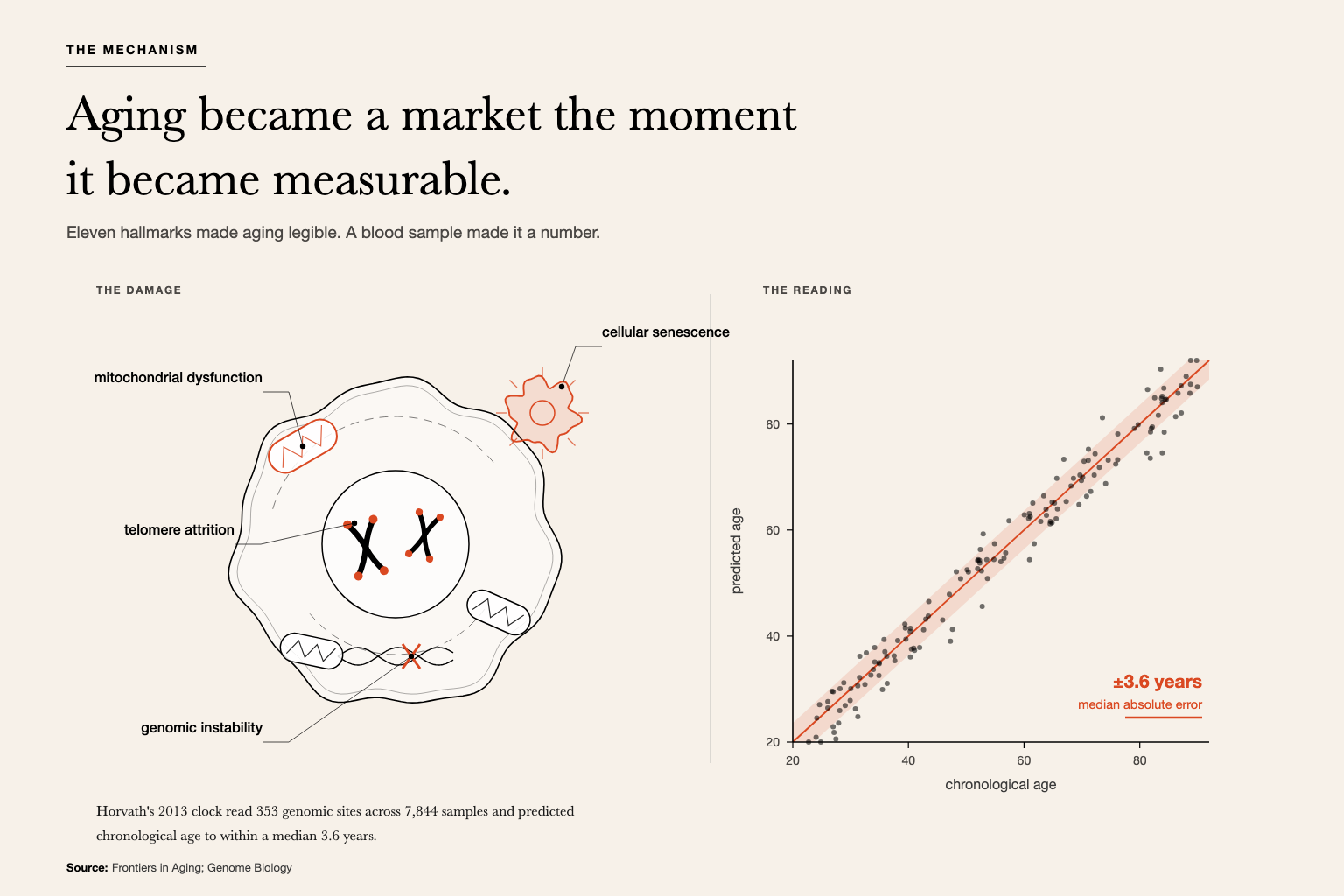
Of these, epigenetic alteration has attracted particular attention because it is measurable from blood, at scale, with reasonable accuracy, right now. In 2013, Steve Horvath published the first widely recognized epigenetic clock: a computational model trained on 7,844 samples across 51 tissue and cell types, using patterns at 353 specific points in the genome where chemical tags called methyl groups accumulate or diminish with age. [20] The clock predicts chronological age with a median absolute error of 3.6 years and a correlation with actual age of 0.92. More important, subsequent refinements showed that the rate at which these methylation patterns shift predicts not just a person's age but their mortality. [21] A second-generation clock called GrimAge, trained specifically to predict lifespan rather than birth year, found that a one standard deviation increase in biological age acceleration above what the clock predicts for a person's chronological age was associated with a 31 percent higher mortality risk. [22] GrimAge was the only clock in a nationally representative American study that predicted cardiovascular-specific mortality. [23]
Cardiorespiratory fitness offers a different window into biological aging, and one with decades of epidemiological backing. VO2 max, the maximum rate at which the body can use oxygen during exertion, reflects the integrated performance of the heart, lungs, blood vessels, and skeletal muscle. A 2018 analysis of 122,007 adults who completed treadmill testing found that the mortality gap between those with elite and low fitness was comparable to or larger than the risk difference attributable to smoking or diabetes. [24] Every one-MET increase in aerobic fitness, roughly 3.5 milliliters of oxygen per kilogram per minute, is associated with approximately a 12 to 15 percent drop in all-cause mortality. [25] VO2 max declines by roughly ten percent per decade in sedentary adults from the age of 25 onward, with steeper declines after seventy: 20 to 25 percent per decade in men. [26] Unlike most molecular biomarkers, it is modifiable, and the relationship between training volume and the rate of decline is well established. Masters athletes who maintain training intensity can limit the decline to five or six percent per decade; those who become sedentary can lose 46 percent per decade. [27]
These biomarkers constitute the scientific substrate of Neko's proposition. The company's scan measures cardiovascular health thirteen ways, flags metabolic dysfunction through blood glucose and HbA1c, assesses skin lesions at sub-millimeter resolution, and monitors inflammatory markers that correlate with the senescent cell burden that accumulates with aging. [28] The hardware is proprietary: Neko designs, manufactures, and operates its own scanning systems rather than licensing existing hospital equipment. [29] The result is a service that sits at the serious end of the wellness-to-medicine spectrum. Neko employs registered doctors who review every result, and its Global Medical Director, Dr. Niklas Kanani MBE, previously served as the National Medical Director for Primary Care at NHS England and led the United Kingdom's COVID-19 vaccination programme. [29]
What the Evidence Actually Shows
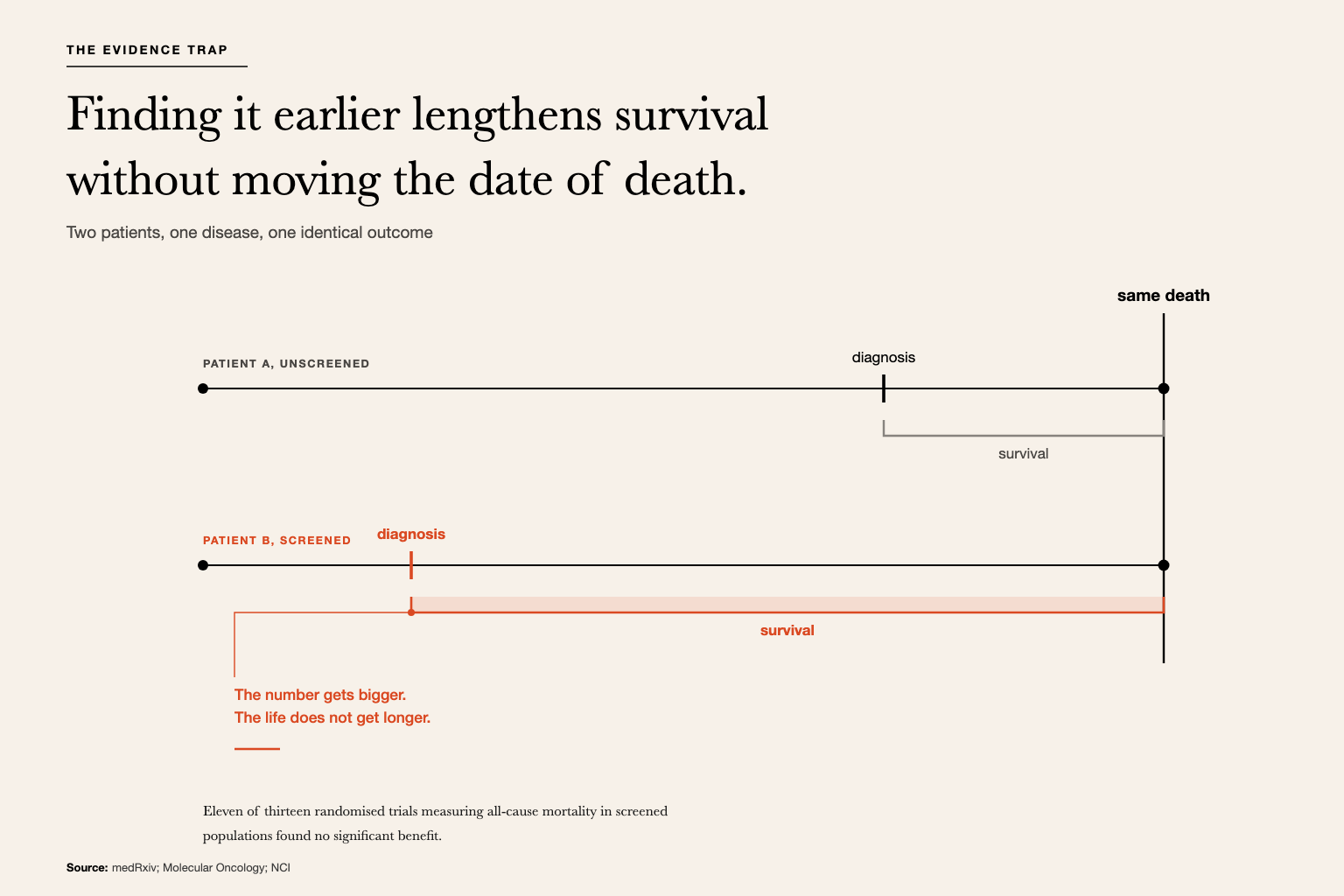
The clinical case for scanning healthy, asymptomatic adults is considerably more complicated than the narrative of early detection naturally suggests. A systematic review by John Ioannidis and colleagues examined 48 randomized controlled trials and 9 meta-analyses and found that documented reductions in disease-specific mortality from screening tests for major diseases are uncommon, and reductions in all-cause mortality are "even more uncommon." [30] A larger synthesis of 31 studies found that eleven of thirteen randomized trials examining all-cause mortality in screened populations found no significant benefit. [31] The South-East London Screening Study followed 7,229 adults aged 40 to 64 through eight years of multiphasic screening with no benefit in mortality. [31] The Inter99 trial enrolled 59,616 Danish adults across five health checks over five years and found no difference in ten-year incidence of ischemic heart disease or stroke. [31]
These findings require careful interpretation because of two related statistical traps. The first is lead-time bias: if screening advances the date of diagnosis without changing the date of death, survival appears to improve while mortality does not change at all. A cancer detected at 60 by screening that would have been detected symptomatically at 67, with death in both scenarios at 70, produces a measured five-year survival rate of 100 percent in the screened case and zero in the unscreened case, yet neither patient lives a single additional day. [32] A 2012 study in the Annals of Internal Medicine found that 76 percent of surveyed physicians incorrectly believed that improvements in five-year survival rates demonstrate that a screening test saves lives. [32] The second trap is overdiagnosis, which is distinct from false positives: it means genuine pathology that would never have caused symptoms or death is detected, labeled as disease, and treated, with all the physical and psychological harms that entails. For lung cancer screening using low-dose CT, systematic review estimates approximately 222 additional overdiagnosed cases per 100,000 people screened compared with no screening. [33]
Whole-body MRI, a technology Neko does not use but which its closest competitors do, offers a useful illustration. The American College of Radiology stated in 2023 that evidence was insufficient to recommend total-body scanning for people without symptoms or risk factors. [34] Cancer is detected in roughly one to two percent of asymptomatic screened individuals, but incidental findings requiring follow-up appear in 78 to 97 percent of screened individuals, with false positive rates around 16 percent. [34] [35] A small study of 22 healthy adults found one malignancy detected, incidental findings in 20 patients, and only two individuals with entirely clean reports; further investigations were needed in 68 percent of subjects. [35]
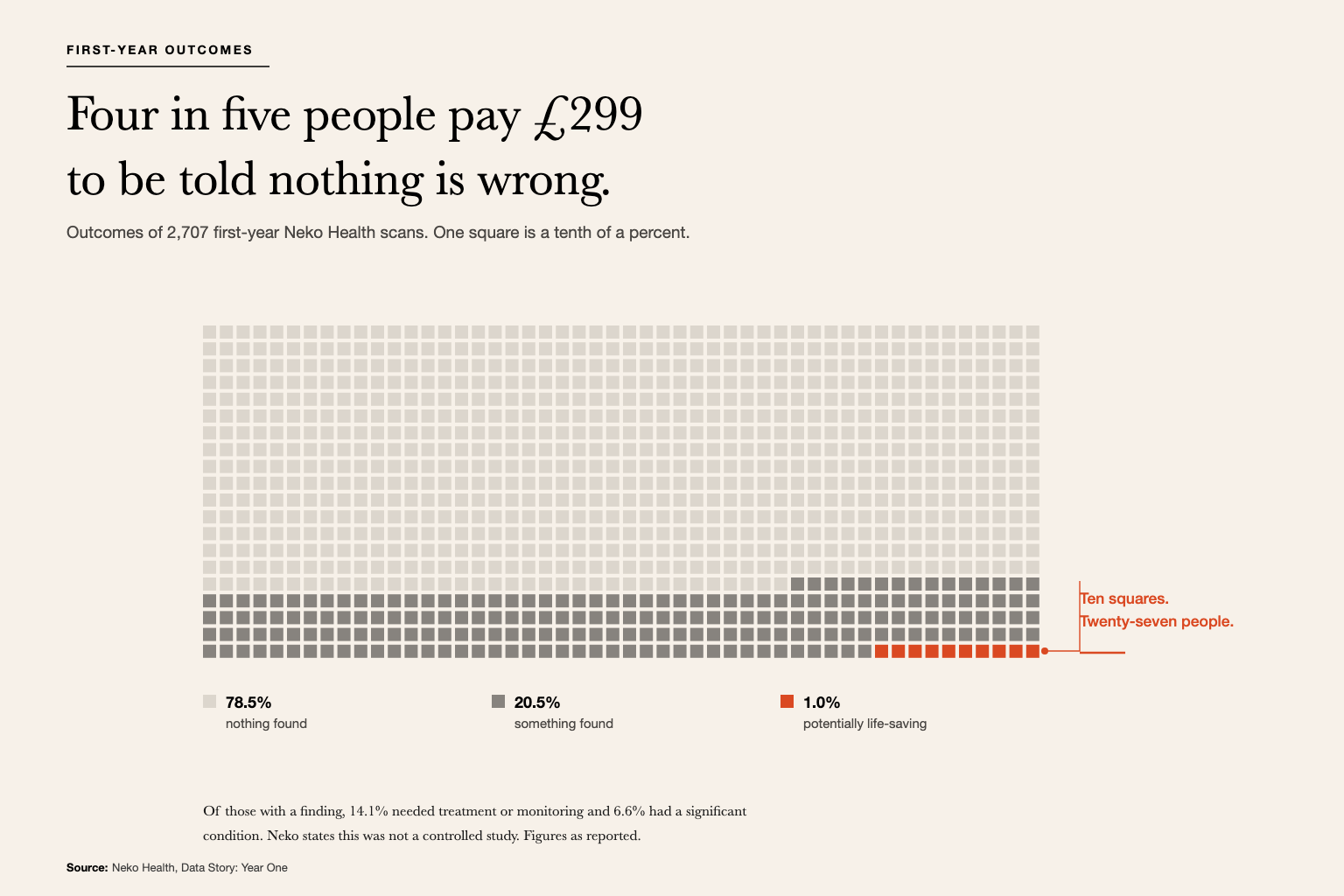
Neko's evidentiary position is more nuanced and, in certain respects, more defensible than general whole-body MRI screening. The company's published data from its first year of operations covered 2,707 patients scanned between February and December 2023. [36] The results showed that 78.5 percent of those scanned had no health issues requiring further examination. Of the remainder, 14.1 percent required medical treatment or monitoring for previously unknown conditions, 6.6 percent had significant conditions including heart disease, type 2 diabetes, and skin cancer, and one percent received potentially life-saving interventions for severe conditions including aortic aneurysms and malignant melanomas. None of the individuals in that last category had been aware of their condition before their appointment. [36] In a follow-up analysis of 1,469 members who returned for a second scan approximately one year later, statistically significant improvements were recorded in blood pressure, cholesterol, and blood sugar across the cohort, with the strongest effects in members who had been identified at their first visit as having hypertension, prediabetes, or diabetes. [37]
Neko explicitly acknowledges the limitations of this data. "This is not a scientific study with a control group for comparison," the company states. [36] The cohort is self-selected to a degree that makes generalization problematic: people who book an annual health scan for £299 are not a representative sample of any population except the health-anxious and the affluent. Without a control group, it is impossible to determine what proportion of the detected conditions would have been found by conventional medicine before causing harm. For specific conditions where early detection has established clinical benefit, particularly aortic aneurysms and melanomas, the case for Neko's model is reasonable. Whether the broader screening-in-general proposition is justified by the evidence remains genuinely contested.
A Company Built on the Bet
The founding story of Neko contains a kind of structural irony that characterizes the entire longevity industry. Hjalmar Nilsonne came from a family of doctors and had sworn he would never work in healthcare. He was running a struggling AI-powered smart home energy startup when Daniel Ek reached him via Twitter direct message in 2018. [3] Ek, who had taken Spotify public and was looking for his next large problem, wanted to do for preventive medicine what he had done for music distribution: use technology to democratize access to something that had previously been reserved for those with serious money. Nilsonne recognized that the obstacle was behavioral rather than medical: making prevention accessible and, crucially, appealing, to the broader affluent market rather than just the ultra-wealthy, who already had access to equivalent services at residential clinics charging thousands of dollars per day. [2]
The founding capital came from Ek's investment vehicle Prima Materia, approximately 30 million euros over four years of stealth development. [38] The Series A of 60 million euros in July 2023, led by Lakestar, brought Niklas Zennström of Atomico and Klaus Hommels of Lakestar onto the board. [39] The company's clinical leadership was built with deliberate seriousness: Chief Medical Officer Dr. Sunita Mishra holds an MD from the University of Arizona and an MBA from Wharton and previously served as Chief Medical Officer at Amazon Health. [29]
The business model depends on a dynamic that Neko's own data confirms: the majority of people who come once return. Across various reporting periods, 75 to 80 percent of members rebook and prepay for their next annual scan before leaving their appointment. [40] [36] This is the core economic logic. The scan is priced at a level that attracts a self-selecting population with sufficient health consciousness and disposable income to pay annually for preventive information. That population, precisely because it is health-conscious, is also the population most likely to act on what it finds, to modify behavior, and to keep coming back. The Spitalfields flagship in London, covering 7,466 square feet with six scanning suites, has a design capacity of approximately 30,000 scans per year. [41] Clinicians see around nine members per day, compared to 30 or more appointments in standard primary care, leaving time for the unhurried doctor consultation that is part of what the company is selling. [5]
The Series B valuation multiple of approximately 666 times trailing revenue was not an assessment of Neko's current size but of the market it might eventually reach, augmented by a proprietary longitudinal dataset that grows with every repeat visit. The long-term strategic ambition, as stated by CEO Nilsonne, is to transition from out-of-pocket consumer billing to commercial partnerships with major health insurers, positioning the scan as a reimbursed primary care utility. [5] A successful US launch would be the first step toward demonstrating that the model scales beyond its Scandinavian origins.
The Market for Mortality
Neko sits within an investment landscape that has undergone a dramatic transformation. Global venture capital into longevity companies reached $8.49 billion in 2024, more than doubling the $3.82 billion invested in 2023. [42] The United States accounts for 84 percent of that deal volume. [43] At the far reaches of the field, the investments dwarf anything in the consumer preventive space. Altos Labs raised $3 billion in a single round in 2024, backed by Jeff Bezos, Yuri Milner, and ARCH Venture Partners, assembling a team that includes four Nobel laureates and is focused on cellular reprogramming: the attempt to reset cells to a more youthful epigenetic state. [44] Sam Altman invested $180 million of his own money into Retro Biosciences, which subsequently raised a further $1 billion in a Series A in January 2025 and achieved a $1.8 billion valuation by May 2026, pursuing plasma-based therapeutics, autophagy modulation, and epigenetic reprogramming. [45] [46] Calico, the Alphabet subsidiary launched in 2013 with Larry Page's endorsement and a TIME cover asking whether Google could solve death, ended its $1.75 billion partnership with AbbVie in November 2025 after its most clinically advanced compound, the ALS drug fosigotifator, failed to outperform placebo in a Phase II/III trial. [47] [48]
The consumer end of the market is organized around a tiered architecture. Function Health, founded in 2021 by Mark Hyman and colleagues, offers annual membership at $365 covering 160-plus biomarker blood tests and had reached a $100 million revenue run rate by February 2025, achieving a $2.5 billion valuation in its November 2025 Series B. [49] [50] Fountain Life, co-founded by Peter Diamandis and Tony Robbins, offers its APEX membership at approximately $20,000 annually, with an "Epic" tier at $85,000, including therapeutic plasma exchange at $10,000 per session. [51] [52] Internal Fountain Life data claims that 14.4 percent of members have undiagnosed cardiovascular, metabolic, or neurodegenerative disease, 3.5 percent have undetected cancer, and 2.5 percent have unknown aneurysms. [53] The sample is, again, radically self-selected: people who spend $20,000 a year on preventive health are not representative of any general population, but they are the people this market is designed to serve.
GRAIL's Galleri test, a liquid biopsy designed to detect signals from more than 50 cancer types in a single blood draw at $949, offered a real-time lesson in the difficulty of translating early-detection promise into clinical evidence. The NHS-Galleri trial, the largest randomized controlled trial of a multi-cancer early detection test ever conducted, enrolled more than 140,000 asymptomatic participants aged 50 to 77 across the United Kingdom. When results were announced in February 2026, the trial had not achieved statistical significance on its primary endpoint of reducing late-stage cancer diagnoses. [54] GRAIL's stock fell more than 51 percent on the announcement. The FDA premarket approval application, filed in January 2026, awaits a potential decision in early 2027. [55] The Galleri outcome is instructive precisely because it came after genuine scientific investment in a large, properly randomized trial: it is the kind of evidence that the rest of the early-detection industry has not yet produced.
The Religion of Optimization
There is a sociological puzzle embedded in the timing of all this. Life extension as a concept is not new. What is new is the scale of capital, the intensity of cultural investment, and the specific demographic doing the investing. To understand why longevity became a preoccupation of technology and finance money in particular, and why it intensified now rather than earlier, requires looking beyond the science.
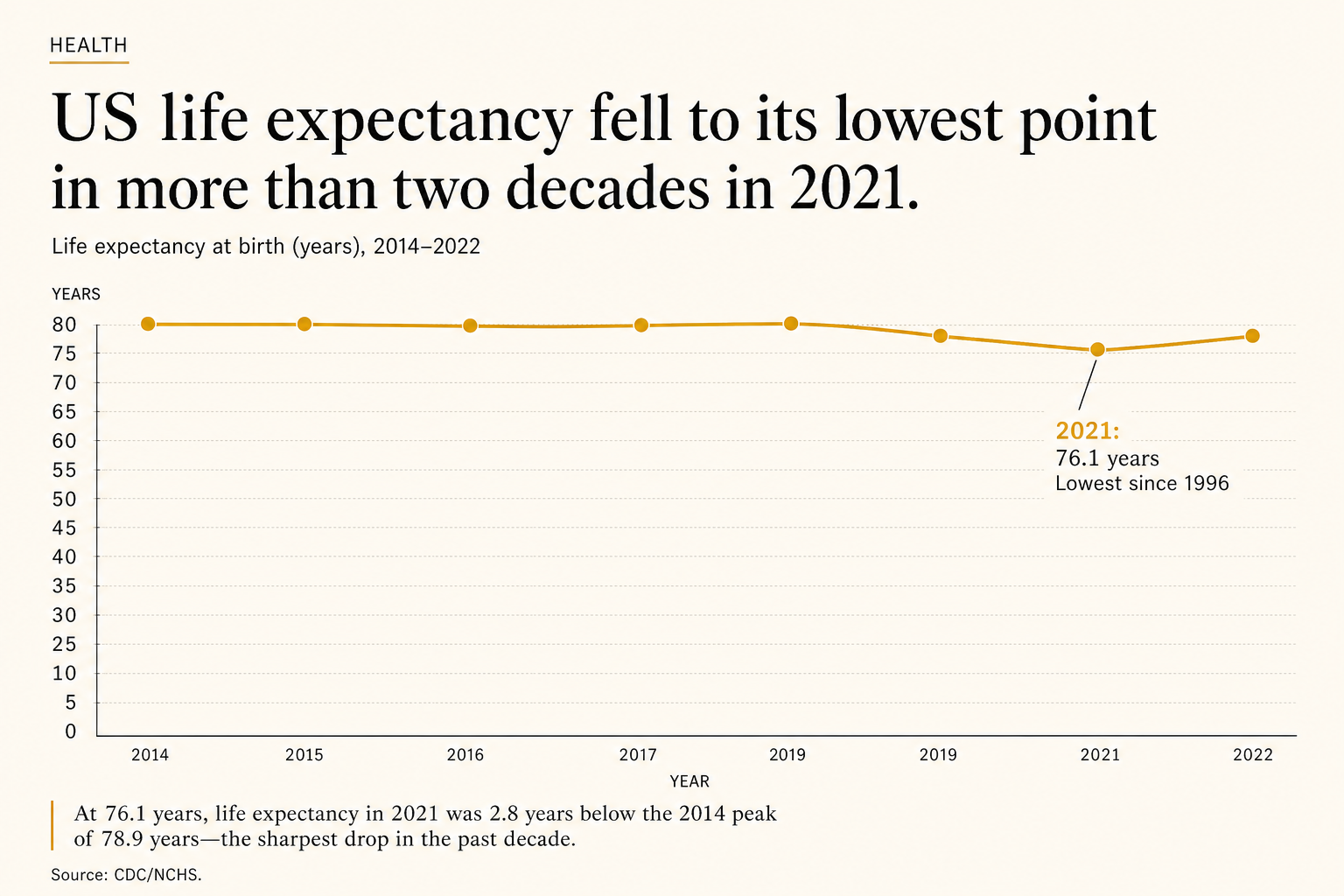
Life expectancy in the United States peaked at 78.9 years in 2014 and has not recovered. [56] It stalled between 2015 and 2017, the first consecutive-year declines since 1915 to 1918, then fell sharply through the COVID-19 pandemic to 76.1 years in 2021, the lowest since 1996. [57] The partial recovery to 77.5 years in 2022 left it still below the 2014 peak. [58] The United Kingdom experienced its own version of this: life expectancy progress halted around 2015 for the first time since 1982, and by 2020 to 2022, male life expectancy had fallen 38 weeks below the 2017 to 2019 peak. [59] In wealthy nations more broadly, the pace of improvement has slowed substantially from the rates achieved between 1990 and 2011. [60]
Against this backdrop, the Princeton economists Anne Case and Angus Deaton documented what they called deaths of despair: a rising tide of mortality among non-college-educated white Americans from suicide, drug overdose, and alcohol-related liver disease. In 2017, approximately 158,000 Americans died of despair, up from around 69,000 in the mid-1990s. [61] The opioid epidemic contributed the largest share, but the data traced a birth-cohort effect that suggested something structural rather than cyclical: each successive generation faced higher baseline risk than the last. [61] Trust in institutional medicine, already fragile for large parts of the American population with deep historical justification, eroded further during the COVID-19 information disorder.
Into this context stepped a technological elite whose professional formation had conditioned them to treat any complex system as a debugging problem. The logic of software development, in which systems are iterative, errors are temporary, and platforms expand continuously, transferred without friction to biology. Aging ceased to appear as a biological reality and became, in this framing, a technical defect awaiting a patch. [62] Larry Ellison gave more than $330 million to aging research. Peter Thiel invested more than $7 million in the Methuselah Foundation and backed cryonics research through Alcor. [63] The Longevity Investors Conference, held annually at the five-star Grand Bellevue hotel in Gstaad since 2022, became the institutional expression of an ideology that had achieved sufficient legitimacy to convene in Switzerland without embarrassment. [64]
The sociologist Silvia Bellezza's concept of "uncopyable assets" helps explain why health optimization has become the status symbol of the moment. Unlike a counterfeit luxury watch, a VO2 max of 55 milliliters per kilogram per minute or a biological age ten years below chronological cannot be faked or purchased wholesale from a manufacturer. [65] It requires sustained discipline, time, and the financial resources to maintain it. In wealthy secular societies where religious frameworks for understanding mortality have eroded, the ritual of tracking, measuring, and optimizing fills a structural vacancy. Academic analysis of the longevity movement has framed this explicitly: the body becomes a permanently steerable process, health a form of embodied cultural capital, and the visible signs of aging markers of personal failure rather than biological inevitability. [66] Those who do not engage with optimization are increasingly regarded, in this culture, as negligent rather than normal.
Bryan Johnson, who founded the payments company Braintree and sold it to PayPal for approximately $800 million in 2013, is the most documented specimen of this phenomenon. [67] He spends approximately $2 million per year on his anti-aging protocol, Project Blueprint, employing around thirty physicians to monitor his biomarkers continuously. [67] In July 2026, he disclosed that he had been diagnosed with autoimmune gastritis, an incurable condition in which the immune system attacks the stomach's parietal cells. The disease, which affects two to five percent of people and often goes undetected, had been active for more than eleven years, present throughout the entirety of his intensive tracking regimen. [68] The sole early signal, consistently low ferritin levels, had been flagged and never fully explained. Johnson's response was characteristic: he announced he was "excited" about next steps, framing the incurable diagnosis as a new optimization problem. [69] The episode captures the fundamental tension within this culture. Comprehensive surveillance of the body detected a malignant melanoma in someone who had no idea they had it. It also failed, for over a decade, to identify an autoimmune process that had been quietly progressing throughout.
Who Pays, Who Benefits
The economics of preventive medicine contain a structural problem that Neko Health and the industry around it have not solved and may not be able to solve: the entity that pays for prevention today is rarely the entity that benefits from the avoided cost tomorrow. A Fortune 100 benefits director put it plainly, noting that average employee tenure at his company was 22 months: "I don't want to spend time investing in driving usage in things that will make my employees healthy only to have them leave and have some other employer benefit from that investment." [70] The same temporal misalignment applies to insurers whose planning horizons are measured in fiscal years, not decades.
Fee-for-service reimbursement, the dominant payment model in the United States, rewards providers for services delivered rather than for health maintained. It "places the incentives on volume over value," as one federal analysis frames it, and therefore "fails to create incentives for preventive care and care coordination." [71] Pay-for-performance incentives introduced by payers have had limited effect: a systematic review found that bonuses representing two to four percent of annual provider income produced no statistically significant changes in screening or immunization rates. [72] When insurers have attempted to remove cost barriers to prevention, the utilization impact has been inconsistent: a rapid review found that 44 percent of studies on breast cancer screening showed increases following cost-sharing elimination, 28 percent showed no significant change, and 22 percent showed decreases. [73]
The consequence is that the financial value of early detection accrues primarily to insurers, who face lower long-term claims costs, and to the individuals who avoid expensive late-stage treatment. Neither of these beneficiaries currently pays Neko Health a pound. Neko's revenue comes from individuals spending $300 to $500 out of pocket for information about their own bodies, information whose clinical value is well-established in some domains and contested in others. The long-term model requires insurance reimbursement to scale meaningfully beyond a self-paying affluent market, and the pathway to reimbursement runs through peer-reviewed clinical trial evidence that does not yet exist for Neko's specific hardware and protocols.
The Inequality Written Into the Design
The research is unambiguous on one foundational point: the people most likely to pay for a Neko scan are the people who least need it and who will, in all probability, live longest regardless. The richest one percent of American men live 14.6 years longer on average than the poorest one percent of American men. [74] Between 2001 and 2014, the top five percent of the income distribution gained approximately 2.34 years of life expectancy while the bottom five percent gained 0.32 years. [75] A Brown University study published in 2025 found that the wealthiest Americans have lower life expectancy than the wealthiest Europeans, and that in some cases the wealthiest Americans have survival rates comparable to the poorest Europeans in western countries such as Germany, France, and the Netherlands. [76] The gap between American counties is staggering: in 2014, life expectancy ranged from approximately 66 years in the lowest-income counties to 87 years in the highest, a difference of more than twenty years. [77]
This is the population that Neko Health is designed for, priced for, and located to serve. The clinics in Marylebone, Covent Garden, and Spitalfields are not in the places where British life expectancy is lowest. The waitlist of 350,000 is not drawn from communities where deaths of despair are concentrated. The structural inequality in health outcomes that drives stalling life expectancy across wealthy nations is overwhelmingly produced by social determinants, including income, education, housing security, access to primary care, and exposure to addiction, that no body scan will address. The $8.49 billion invested in longevity biotech in 2024 dwarfs the research budgets that address the causes of the mortality gaps documented by Case and Deaton. [42] [61]
The pension system implications have not been fully reckoned with. Defined benefit pension funds bear the financial consequence when beneficiaries live longer than actuarial assumptions. The Life and Longevity Markets Association estimates that the potential size of the longevity securities market exceeds $25 trillion worldwide. [78] A DB scheme for US or UK male populations required approximately 29 percent more wealth in 2007 than in 1970 simply to cover the underestimated survival probability. [79] Social Security and Medicare are already less redistributive than their design suggests, because the wealthy, who collect benefits for approximately ten more years than the poor, effectively receive a lifetime transfer that the progressive benefit formula was never designed to accommodate. [74] [80] If longevity medicine succeeds in materially extending the healthy years of the wealthy while the general population continues on its historical trajectory, the distributional consequences for public pensions will compound rather than diminish those existing asymmetries.
What Comes After
The honest account of where this stands is neither the techno-utopian one nor its cynical inversion. The hallmarks of aging are real, measurable biological processes. The epigenetic clocks work, within their limitations. VO2 max predicts mortality with unusual reliability. Certain early-detection interventions, for aortic aneurysm, for melanoma, for a subset of cancers, demonstrably improve outcomes. The idea that medicine could eventually add more than one year of remaining life expectancy per year elapsed is mathematically coherent and scientifically plausible in principle, even if it remains far from realized in practice.
What the current industry has built is something different from and more modest than that idea suggests: a consumer preventive healthcare market that sells early detection and biological age measurement to healthy people who can pay, priced at levels that signal seriousness rather than frivolity, at a cultural moment when the optimization of the body has become both a status project and a quasi-religious practice in wealthy secular societies where other frameworks for managing mortality have lost their hold.
Neko Health is one of the more intellectually serious expressions of this market. Its proprietary hardware, its doctor-led clinical model, and its transparent publication of outcomes data, with explicit acknowledgment of the study's limitations, distinguish it from a wellness spa wearing a lab coat. The 1 percent of first-year scan patients who received potentially life-saving interventions they were entirely unaware of is a real number attached to real people. [36] The company's repeat-scan data showing improvements in blood pressure, cholesterol, and blood sugar in members with chronic conditions is directionally credible even if causality cannot be established without a control group. [37] What Neko has not produced, and what no company in this space has produced, is a randomized controlled trial demonstrating that routine scanning of asymptomatic adults reduces all-cause mortality. GRAIL tried that experiment at scale in the United Kingdom with 140,000 participants and found that the primary endpoint was not met. [54]
The gap between the aspiration and the evidence is where the industry lives, where the capital is deployed, and where the cultural energy is concentrated. Longevity escape velocity remains a theoretical threshold, not a clinical reality. The consumer companies building markets around its promise are doing something real and commercially sophisticated, providing wealthy people with information about their bodies that may improve their health behaviors and occasionally catches something serious. They are also, in the process, building asset classes, data moats, and brand positions in anticipation of a breakthrough that has not yet occurred and whose timeline is genuinely unknown. Neko Health's $7 billion valuation is a bet on the direction of travel, not the present destination. Whether the direction holds, whether the evidence catches up with the idea, and whether the benefits eventually reach anyone who is not already positioned to benefit: those are the questions that will determine what this industry actually becomes.
- Neko is not selling immortality directly. It is selling a premium, repeatable health audit that converts fear of late diagnosis into recurring consumer revenue.
- Longevity escape velocity is mathematically coherent, but current life-expectancy gains remain far below the required pace. [12]
- The strongest critique is evidentiary: broad screening of asymptomatic adults has often failed to reduce all-cause mortality in randomized studies. [30] [31]
- If longevity medicine works first for the affluent, pension, insurance, and public-health inequalities will compound rather than disappear. [74] [79]
Get the next issue in your inbox.
Free, weekly. One company or market, taken completely apart — every figure sourced and verified with Valyu DeepResearch.
Issue queued.
Your next cited briefing is on its way to .