
The most valuable drug story in modern medicine began with a signal the body destroys in roughly the time it takes to read this sentence. [1]
The hormone before the market
GLP-1 was not invented by Novo Nordisk, Eli Lilly, TikTok, or Hollywood. It is a peptide hormone released from specialised cells in the lower small intestine after food arrives, then carried toward the pancreas as part of the body’s meal-response system. Its job is exquisitely conditional: help amplify insulin when glucose is high, slow gastric emptying, suppress glucagon, and signal satiety.
The obstacle was always time. Native GLP-1 is clipped by the enzyme DPP-4 and has a circulating half-life of approximately one to two minutes [1]. For decades, that made it fascinating physiology rather than medicine. The history of Ozempic, Wegovy, Mounjaro, and Zepbound is therefore not simply a discovery story. It is an engineering story: how chemists and biologists learned to make a vanishing gut signal last long enough to become a therapy.
The idea reaches back to the incretin concept, coined in 1932 after earlier work suggested the gut could instruct the pancreas [1]. But only in the 1980s did molecular biology identify GLP-1 as a cleavage product of proglucagon, and only in 1987 did researchers show that GLP-1 (7-37) stimulated insulin release from rat pancreatic islet cells [1].
How science cheated the clock
Two paths solved the same problem. One came from comparative biology. In the early 1990s, John Eng identified exendin-4, a 39-amino-acid peptide from the Gila monster with roughly 53 percent sequence homology to human GLP-1 [2]. A single structural difference mattered: glycine at the amino terminus made the molecule resistant to DPP-4. Its half-life in human plasma was 2.4 hours, about eighteen times longer than native GLP-1 [2]. Licensed to Amylin, it became exenatide, approved by the FDA in 2005 as Byetta, the first GLP-1 receptor agonist to reach patients [1].
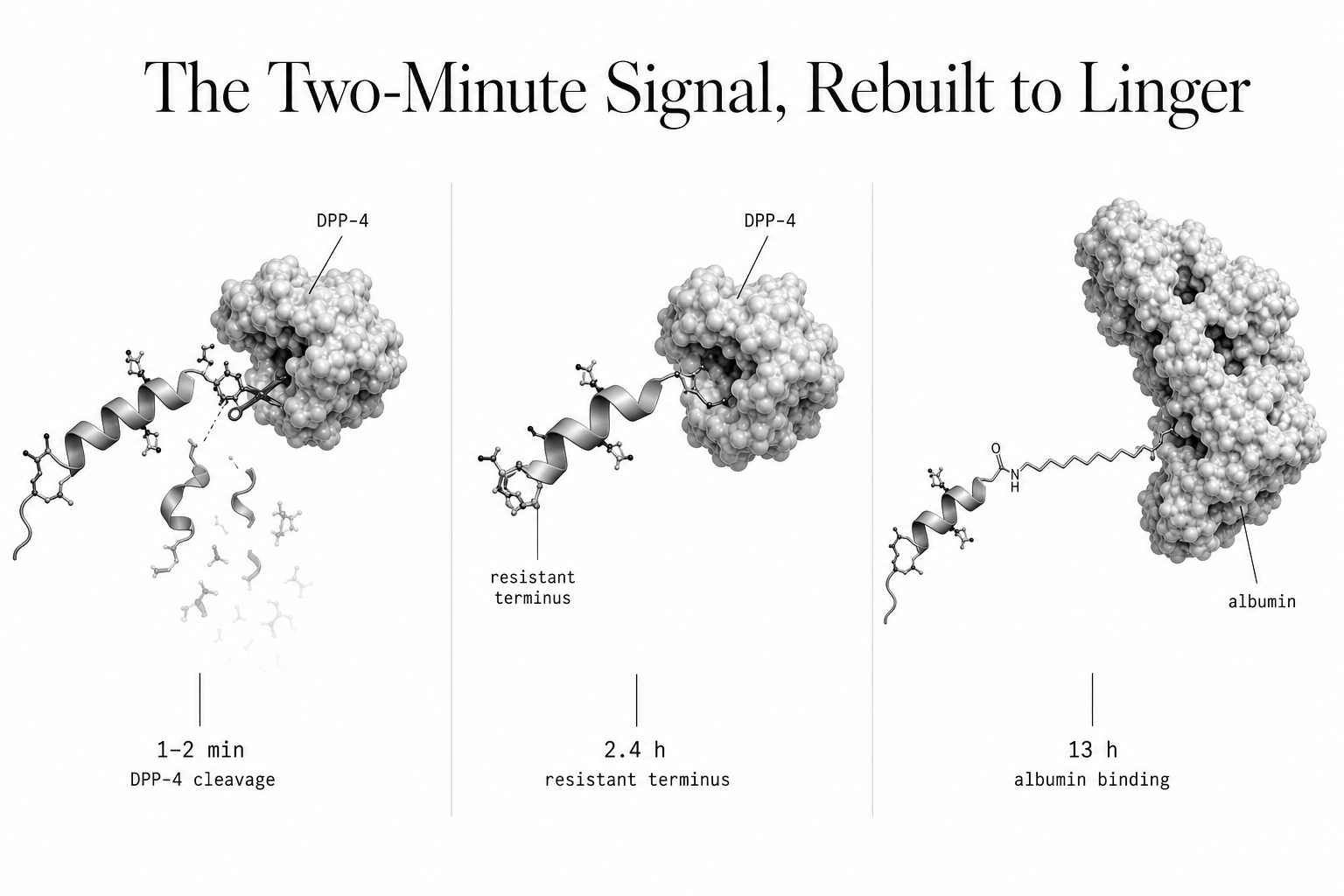
The other path was chemistry. At Novo Nordisk, Lotte Bjerre Knudsen’s team attached a C16 fatty acid chain to a modified GLP-1 molecule, allowing it to bind reversibly to albumin, evade rapid clearance, and release its activity slowly [2]. The result was liraglutide, with a 13-hour half-life, approved as Victoza for diabetes in 2010 and Saxenda for obesity in 2014 [2]. The move from minutes to hours made the class possible. The move from diabetes to obesity made it cultural.
The entire modern story of Ozempic, Wegovy, and their successors is the story of how science learned to cheat that clock.
The circuit that makes wanting feel quiet
GLP-1 drugs are often described as appetite suppressants. That is true, but too small. The deeper mechanism is that they change how the body and brain assign urgency to food.
At the pancreas, GLP-1 receptor activation triggers a Gαs pathway, increasing cyclic AMP and activating PKA and Epac [3] [4]. These pathways amplify insulin secretion only when glucose is already elevated. PKA can help close ATP-sensitive potassium channels only under the metabolic conditions created by high glucose, so the cascade is glucose-dependent rather than automatic [4]. That is why GLP-1 agonists differ from insulin or sulfonylureas: they do not simply force insulin release regardless of context.
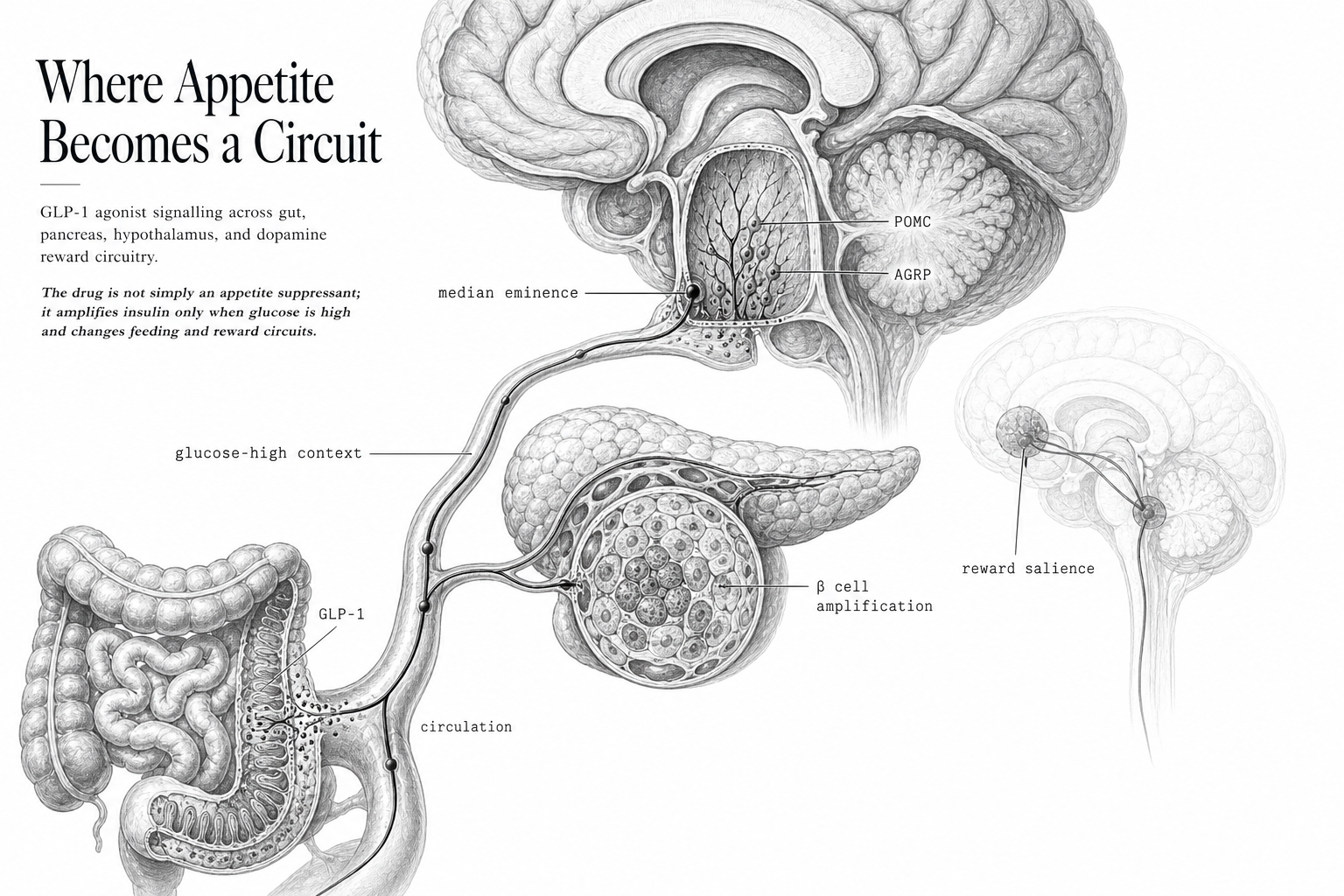
The brain effect is what changed obesity treatment. Pharmaceutical GLP-1 agonists persist in circulation long enough to reach the central nervous system through tanycytes in the median eminence, then influence arcuate nucleus feeding circuits [5]. They excite POMC neurons that suppress feeding and inhibit AGRP neurons that promote hunger [6]. They also affect mesolimbic dopamine pathways linked to reward and motivational salience [7] [8]. Patients call the result a reduction in “food noise”: intrusive preoccupation with food that is not merely physical hunger [9]. A George Washington University study found that 76 percent of GLP-1 users reported significant calming of food noise [10].
A therapy becomes a social fact
The GLP-1 moment did not spread like an ordinary drug launch. It spread through confessional media, denial, shame, before-and-after content, celebrity ambiguity, and algorithmic commerce.
In November 2022, Elon Musk posted: “Fasting + Ozempic/Wegovy + no tasty food near me” [11]. By February 2023, #ozempic had accumulated more than 500 million views on TikTok [12]. Influencers built communities around weekly injections, side effects, access hacks, and transformation narratives. Telehealth companies paid creators through affiliate referral arrangements, often without clear disclosure [13]. One creator was reported to have earned “five figures for a single Instagram story” promoting GLP-1-related products [14].
The celebrity cycle moved from suspicion to disclosure to moral reframing. Oprah Winfrey called medically approved weight management treatment “relief, redemption, a gift,” and said she was done with shaming [15]. The phrase mattered because it recast the drugs from vanity aid to biological correction. Yet side-effect disclosures also punctured the fantasy: Amy Schumer reported being “bedridden,” Sharon Osbourne described persistent nausea after losing 42 pounds, and Lottie Moss said she experienced a seizure from dehydration after taking an inappropriate dose [16] [15] [17].
The economics of a chronic market
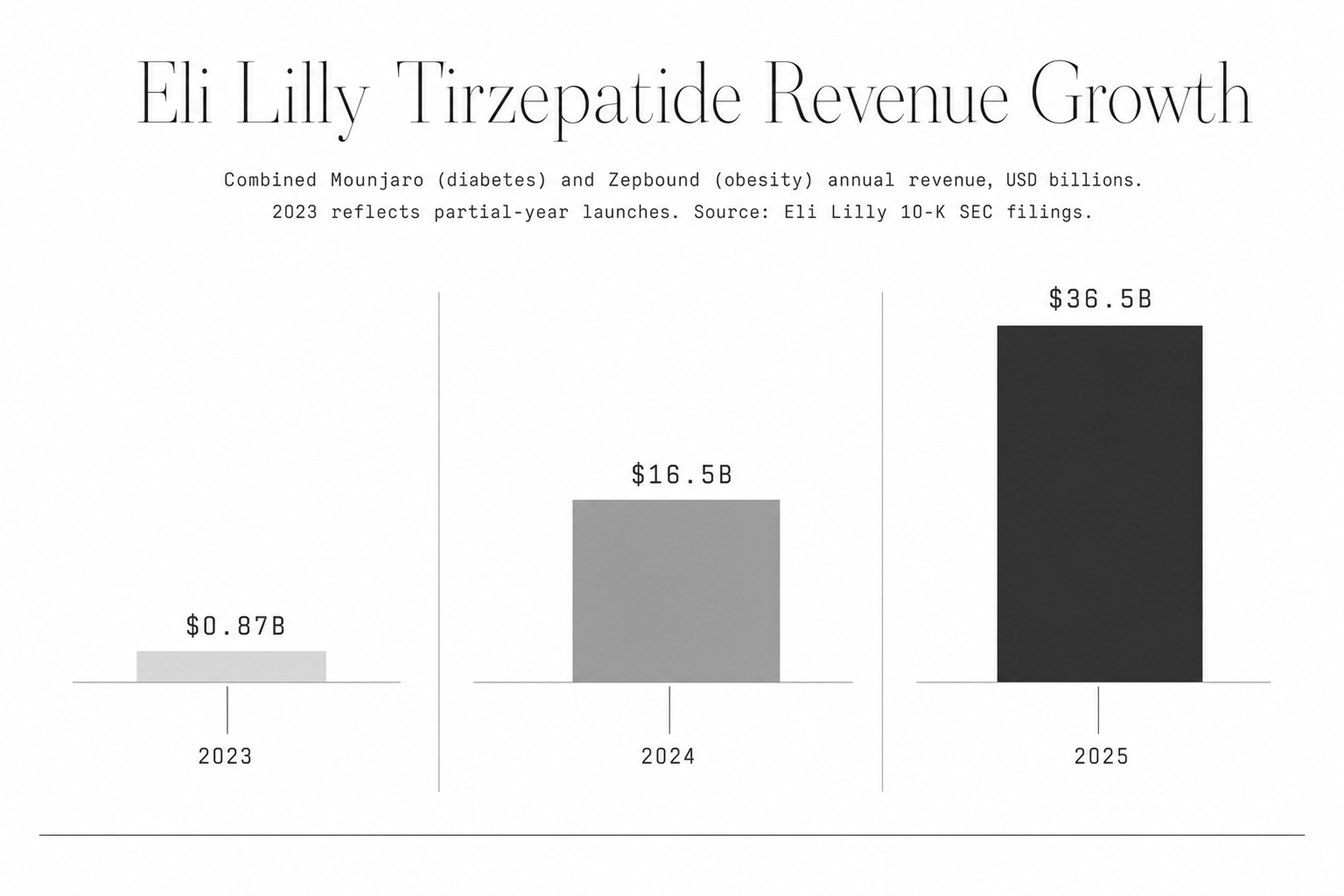
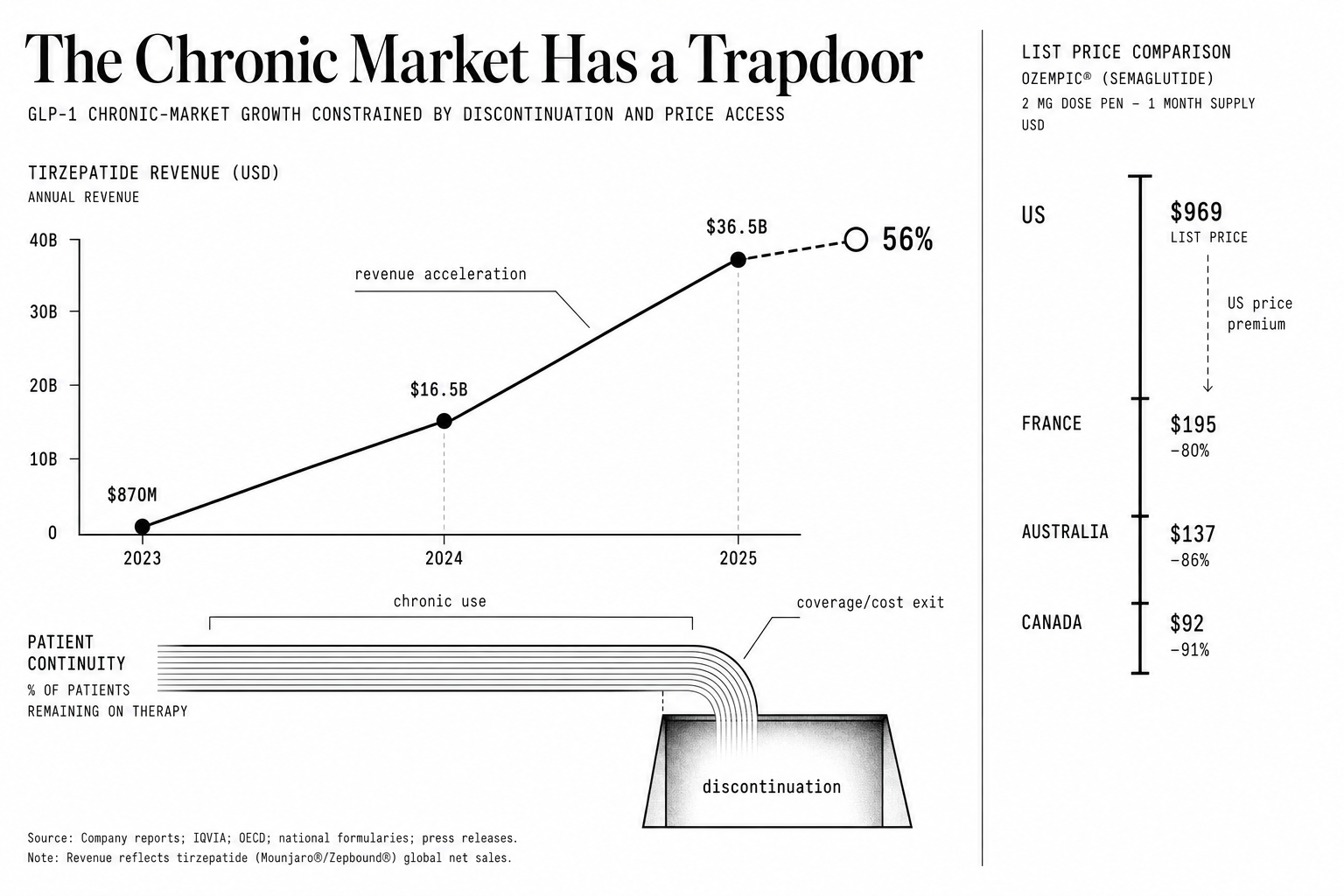
The commercial scale is difficult to compare because the category has few precedents. Eli Lilly’s tirzepatide products, Mounjaro for diabetes and Zepbound for obesity, generated combined revenue of $870 million in 2023, $16.5 billion in 2024, and $36.5 billion in 2025, equal to 56 percent of Lilly’s total company revenue [18]. Gross margins ran at 83 percent in 2025 [18].
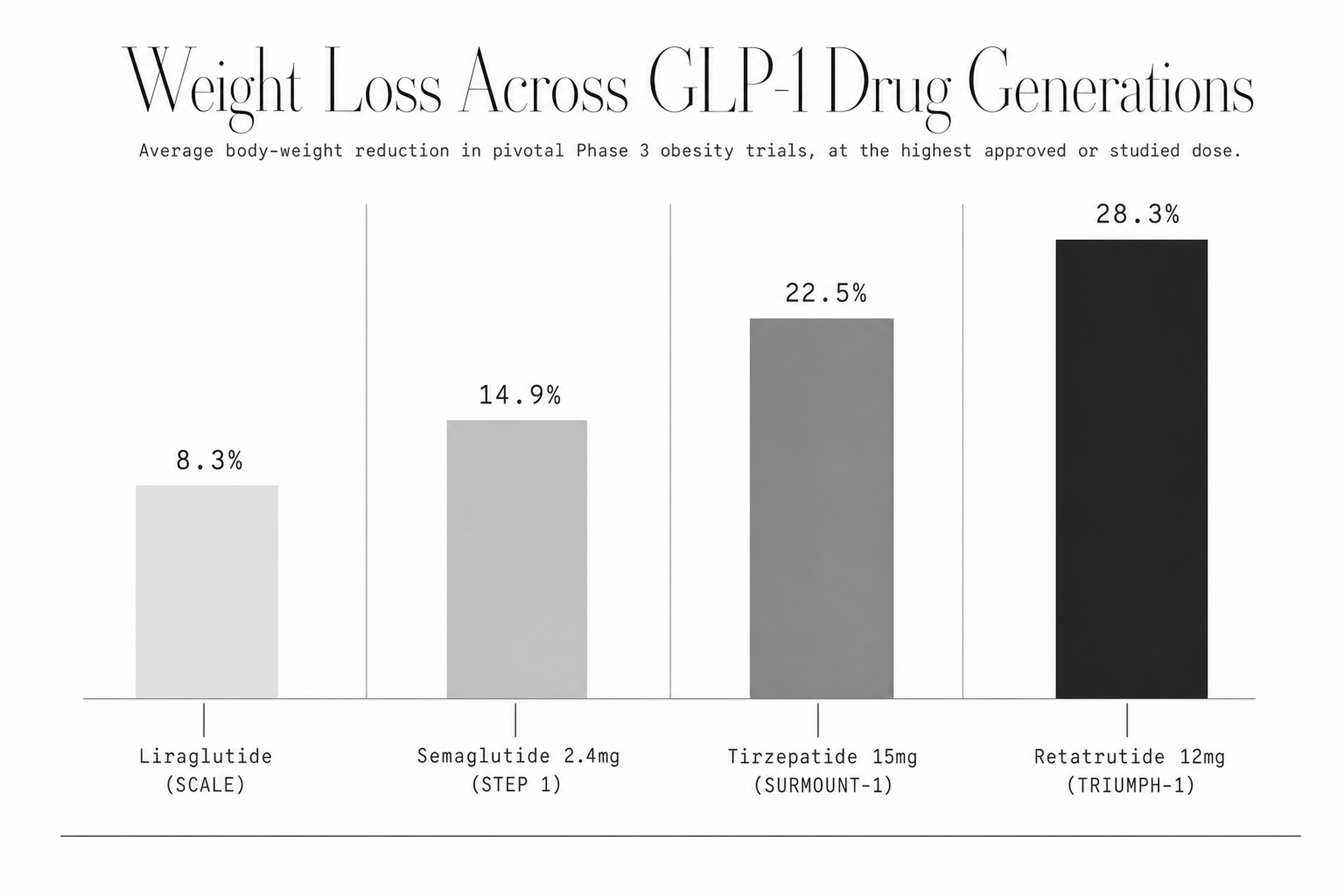
Tirzepatide’s advantage is mechanistic and commercial. Unlike semaglutide, which activates GLP-1 receptors, tirzepatide activates both GLP-1 and GIP receptors [19]. In the head-to-head SURMOUNT-5 trial, tirzepatide produced 20.2 percent average weight loss versus 13.7 percent for semaglutide, a 47 percent greater relative reduction [20]. By the second quarter of 2025, Lilly held approximately 57 percent of the broader GLP-1 market [21].
Pricing remains the central fault line. Ozempic lists in the United States at approximately $1,027 per package and Wegovy at approximately $1,349, while Ozempic costs roughly $91 per month in France, $98 in Australia, and $167 in Canada [22] [23]. Goldman Sachs projected the global injectable anti-obesity GLP-1 market at $95 billion by 2030, down from $130 billion, partly because roughly half of patients discontinue treatment and cost or loss of coverage accounts for 60 to 64 percent of those exits [24].
The next drugs will not be one thing
The pipeline is no longer asking whether GLP-1 works. It is asking which frictions matter most: efficacy, convenience, tolerability, manufacturing, route of administration, or payer acceptance.
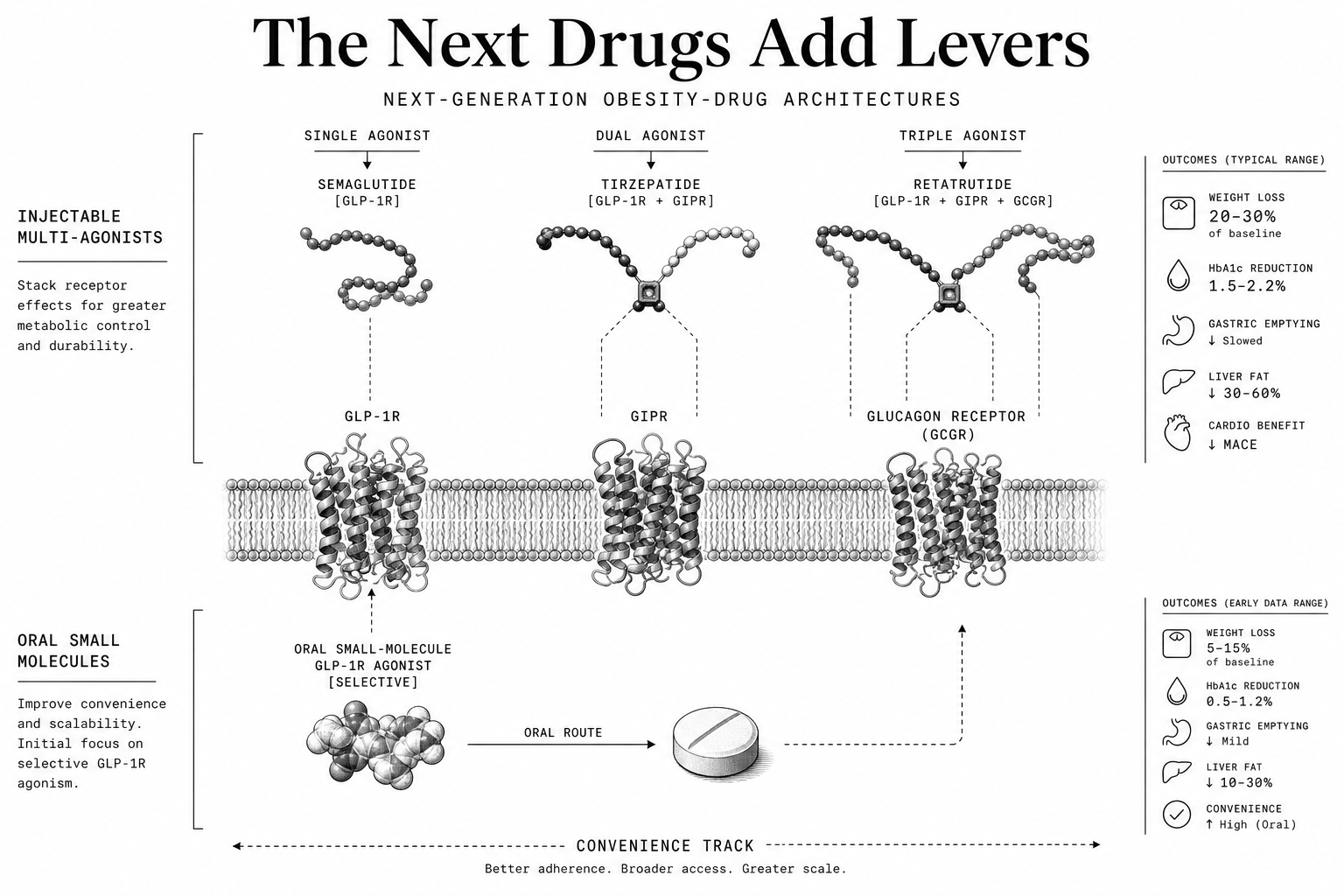
Retatrutide adds glucagon receptor activation to GLP-1 and GIP agonism. In theory, glucagon receptor stimulation may increase energy expenditure through brown adipose tissue thermogenesis, complementing appetite effects [25]. In Phase 3 TRIUMPH-1, retatrutide produced mean weight loss of 28.3 percent at 80 weeks, with 45.3 percent of participants achieving at least 30 percent body weight reduction [26]. At 104 weeks, mean weight loss reached 30.3 percent among those continuing to maximum tolerated dose [27].
Oral drugs address another bottleneck. Lilly’s orforglipron is not a peptide but a small-molecule GLP-1 receptor agonist taken once daily without food or water restrictions [28]. In ATTAIN-1, the highest dose produced 12.4 percent weight loss over 72 weeks, below injectable tirzepatide but potentially more acceptable for people unwilling to self-inject [28] [29]. Novo Nordisk is pursuing CagriSema, combining semaglutide with the amylin analog cagrilintide, and amycretin, a unimolecular GLP-1 and amylin dual agonist that entered Phase 3 development in 2025 [30] [31].
The NHS meets the arithmetic
Health systems face the hardest question: if obesity is chronic and these drugs work only while taken, what does responsible access look like?
In March 2023, NICE recommended semaglutide for weight management in adults on the NHS, but only for patients meeting strict BMI and comorbidity criteria and only through Tier 3 or Tier 4 specialist weight management services [32] [33]. GPs cannot simply prescribe it under the guidance. Treatment is capped at two years [33].
That cap collides with the biology. In STEP-4, people switched from semaglutide to placebo after 20 weeks regained an average of 6.9 percent of body weight over the next 48 weeks, while those who continued reached 17.4 percent cumulative loss [34]. NICE’s own modelling assumed loss of weight benefit and return to pre-treatment glycaemic state within three years of stopping [33].
The access gap has created a two-track system. NHS list price for Wegovy at the 2.4 mg dose is £175.80 per four-dose pack, though the actual NHS price is confidential [33]. Private UK prescriptions commonly cost £200 to £300 per month, before consultation and monitoring fees [35]. Specialist services are unevenly distributed, producing a postcode lottery in which clinical eligibility does not guarantee treatment [33].
- GLP-1 drugs are engineered versions of a native gut signal, redesigned to survive long enough to act therapeutically.
- Their most important effect is not simple appetite suppression, but altered signalling across pancreatic, hypothalamic, and dopamine reward circuits.
- The market is becoming a chronic-treatment market, which makes discontinuation, payer coverage, and long-term access more important than launch demand.
- The next wave will split the category: more powerful multi-agonists for maximum efficacy, and oral small molecules for convenience and scale.
What the molecule cannot solve
The science is now clearer than the system around it. GLP-1 agonists work because hunger is not merely a moral impulse or a calorie ledger. It is a regulated neuroendocrine state, shaped by gut peptides, glucose, vagal signalling, hypothalamic neurons, dopamine circuits, and the food environment. These drugs intervene in that system with unusual precision.
What remains unsettled is distribution. Roughly one in eight American adults is now taking a GLP-1 drug [36]. At the same time, shortages, high US prices, NHS rationing, off-label demand, celebrity marketing, and telehealth affiliate promotion have turned a medical breakthrough into a social sorting mechanism. The drugs challenge stigma by proving that biology matters. They also risk deepening inequality if long-term treatment remains available chiefly to those who can pay.
The two-minute hormone has become a multi-billion-dollar platform. It may reduce cardiovascular events, reshape food consumption, change bariatric surgery volumes, alter employer insurance decisions, and force public health systems to define obesity as chronic in practice rather than rhetoric [37] [33]. The molecule quiets a signal inside the body. It has made the signals outside it much louder.
Get the next issue in your inbox.
Free, weekly. One company or market, taken completely apart — every figure sourced and verified with Valyu DeepResearch.
Issue queued.
Your next cited briefing is on its way to .